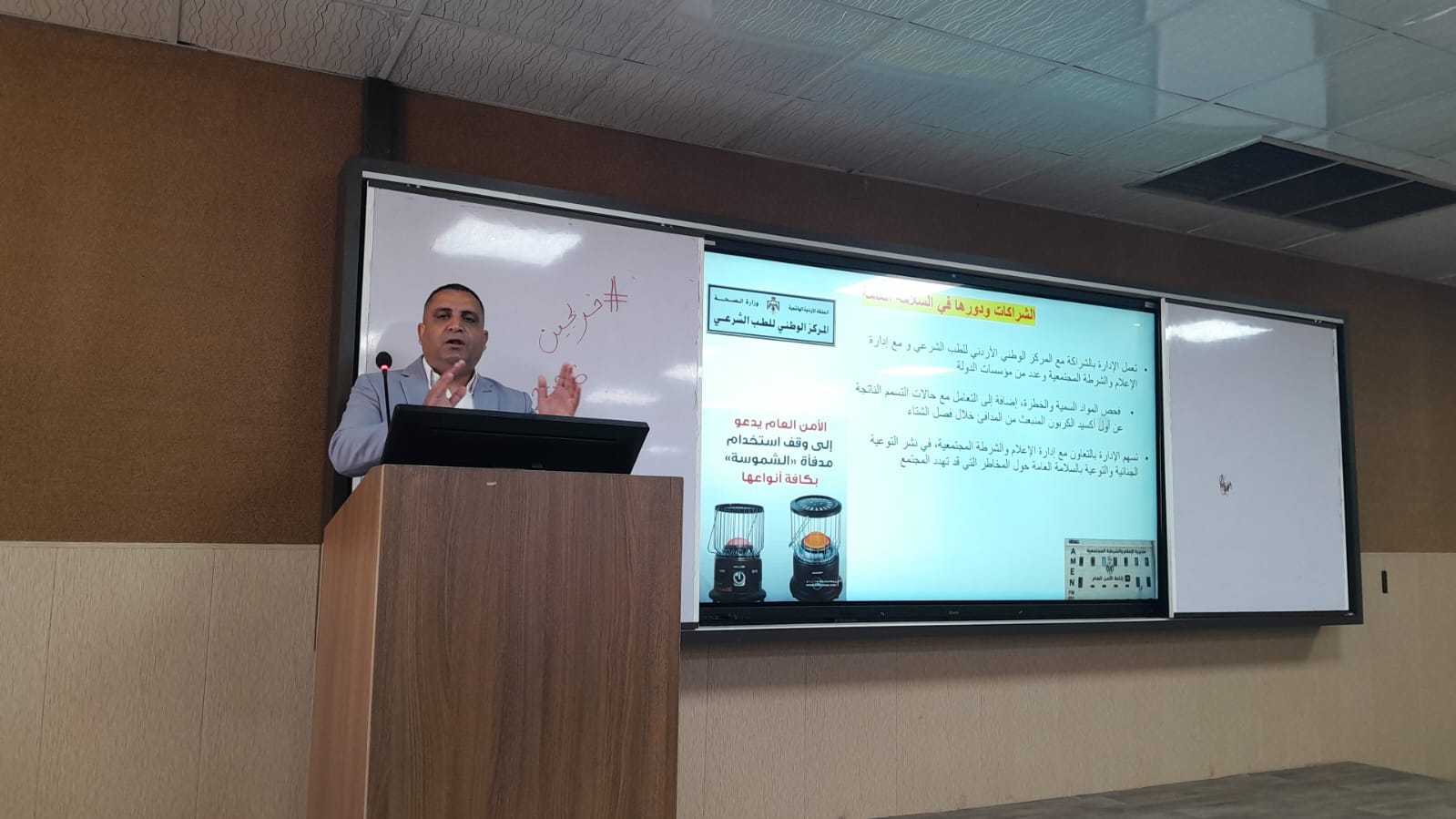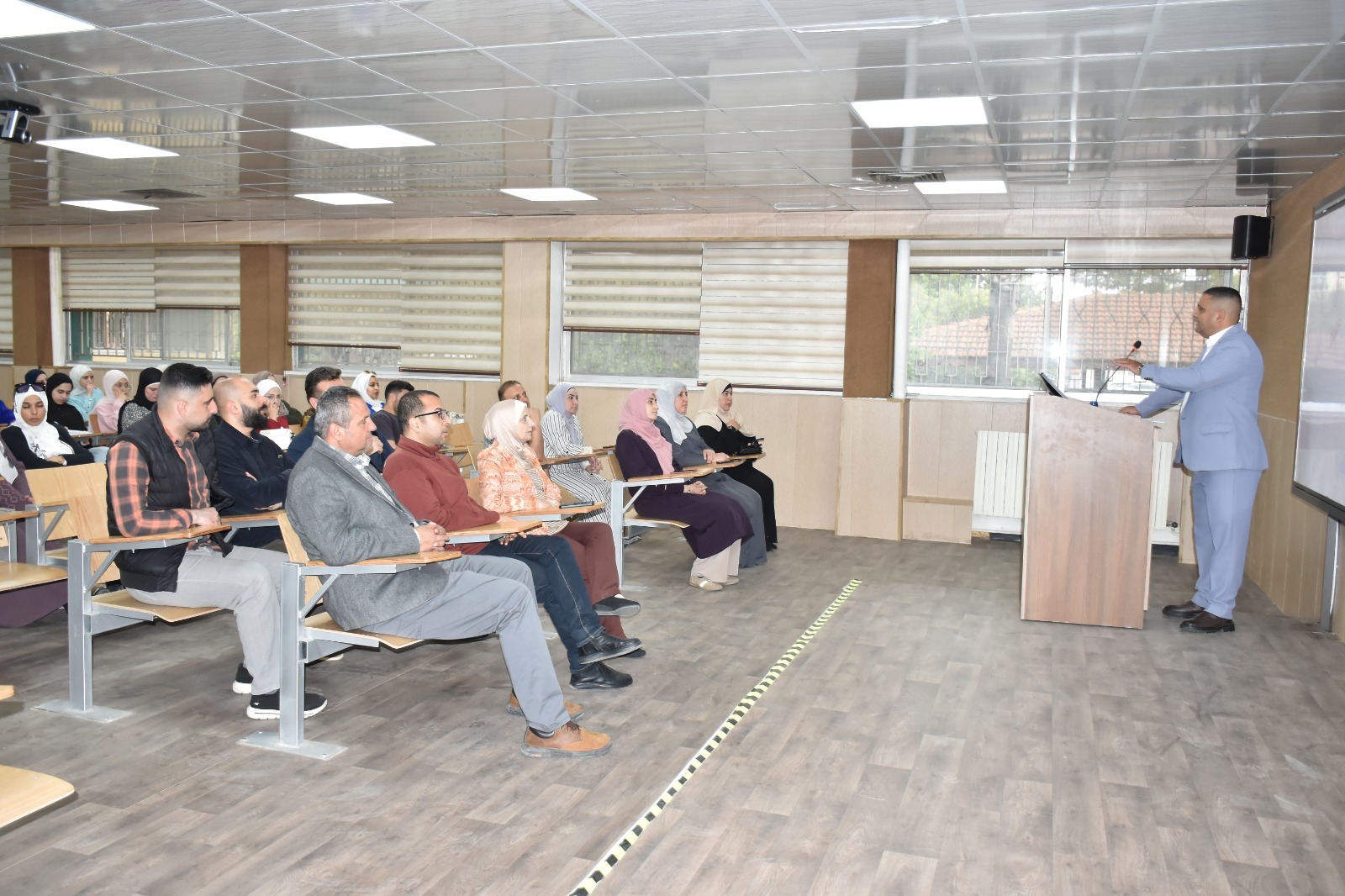
As part of the scientific activities organized by the Faculty of Science, and under the patronage of the Dean of the Faculty, Professor Dr. Moheeb Awawdeh, and coordinated by Dr. Rabia Rawashdeh, a scientific lecture was held on the role of the Department of Laboratories and Forensic Evidence in criminal investigation. The lecture was delivered by Lieutenant Colonel Dr. Engineer Ma’n Al-Shara’ah and Major Muhannad Al-Momani from the Department of Laboratories and Forensic Evidence at the Public Security Directorate, with the attendance of several faculty members and students.
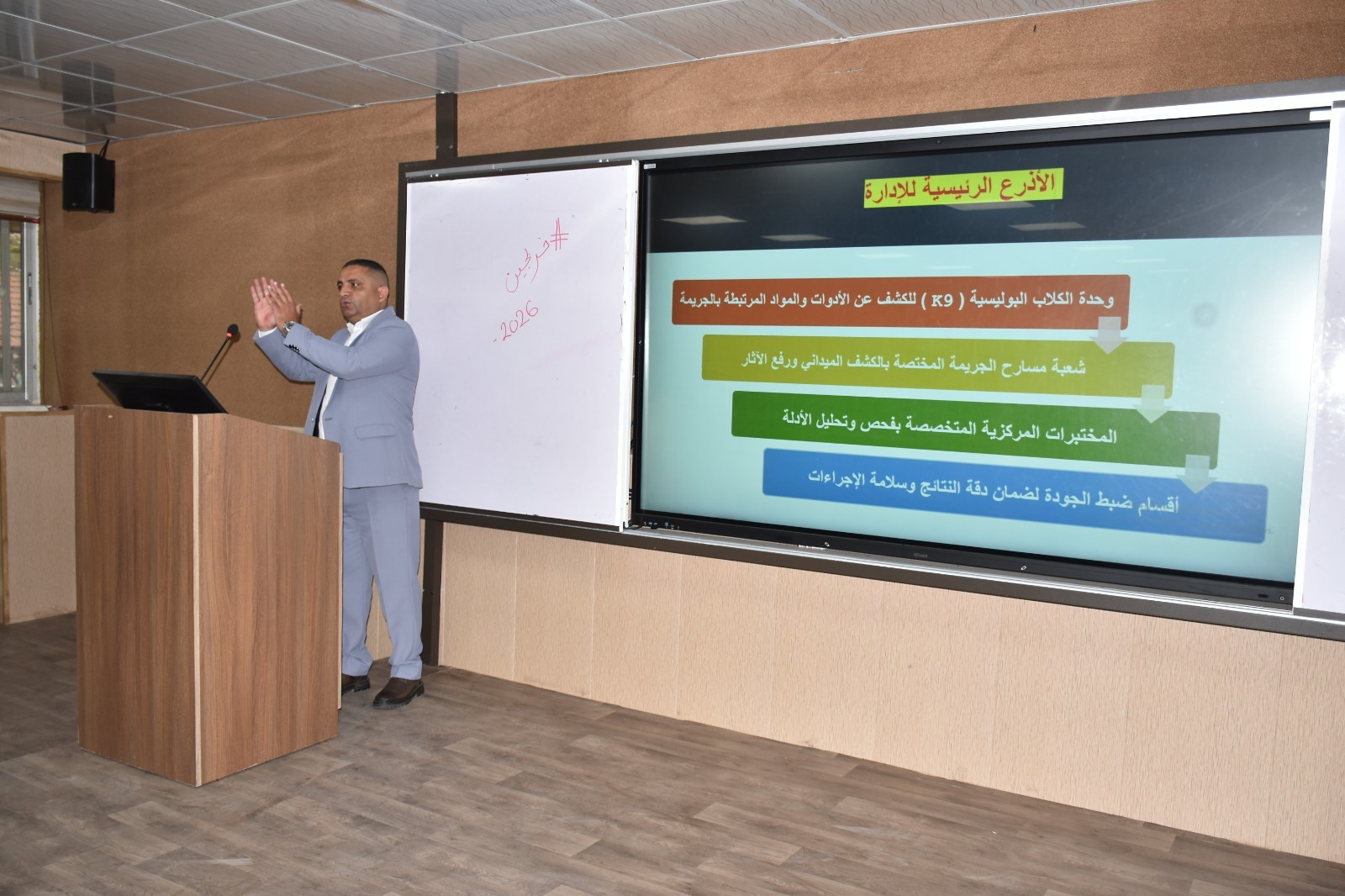
Lieutenant Colonel Dr. Engineer Ma’n Al-Shara’ah opened the lecture by discussing the role of the Department of Laboratories and Forensic Evidence in solving crimes and analyzing forensic evidence. He reviewed the main branches of the department, which include the Police Dogs Unit (K9), the Crime Scene Division specialized in field investigation and evidence collection, the central laboratories dedicated to examining and analyzing evidence, in addition to quality control sections.
He also addressed the role of the Crime Scene Division spread across various police directorates in the Kingdom, which manages crime scenes technically by collecting traces and samples, documenting and photographing evidence, sending samples to specialized central laboratories, and preparing technical reports for criminal cases.
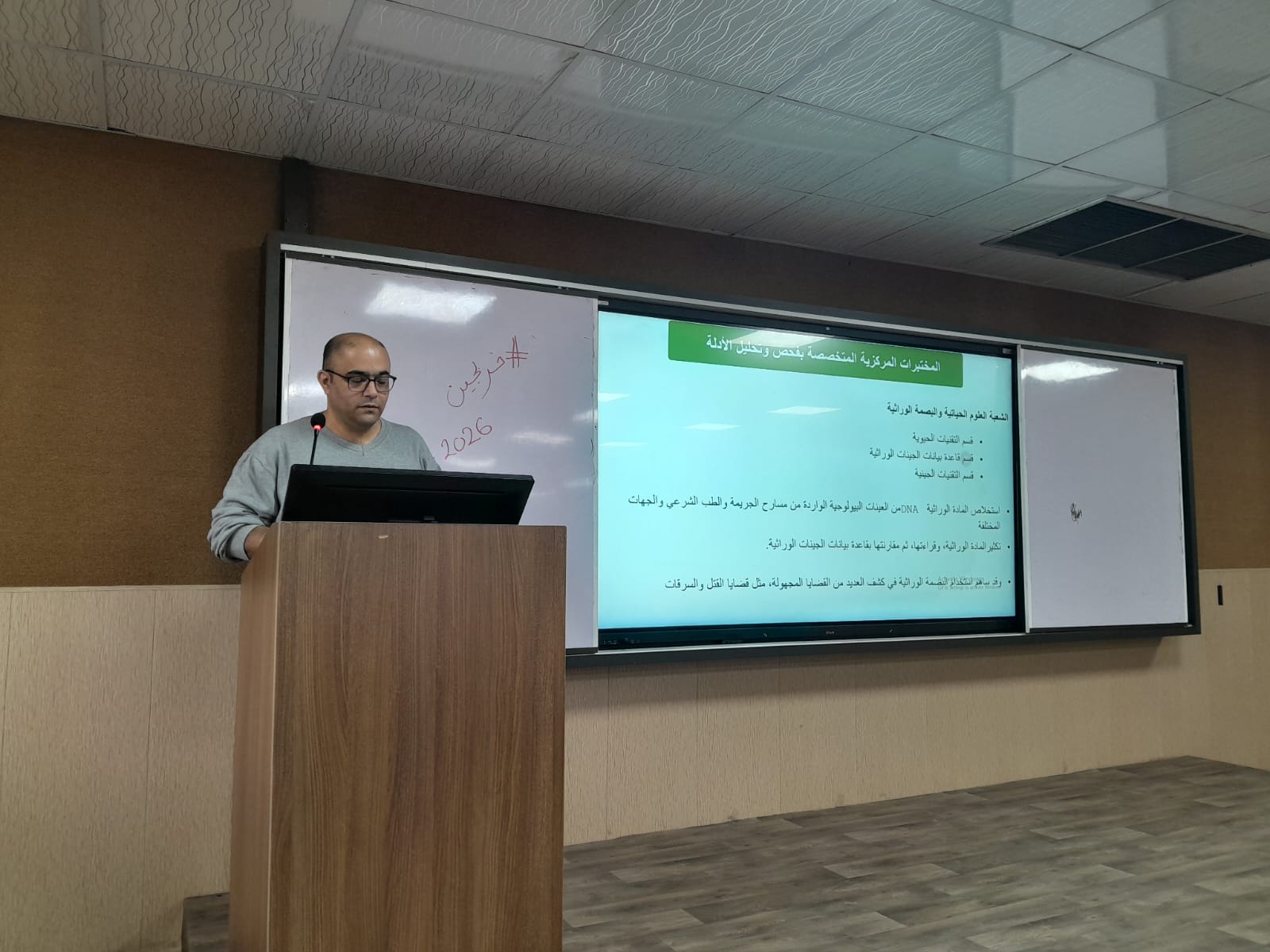
He pointed out that the Department of Laboratories and Forensic Evidence consists of several specialized divisions and sections, most notably the technical and physical division, which includes the weapons and tool marks section, electronic forensic evidence, and fingerprint section. In addition, the chemical division specializes in examining toxins, drugs, fire residues, and explosives, while the biological and genetic fingerprint division focuses on DNA analysis and genetic technologies. The lecturer presented several real criminal cases in which perpetrators were identified years after the crimes were committed, thanks to modern technologies and DNA fingerprint analysis. Among these were cases where criminals were identified more than ten years after the crimes, highlighting the importance of forensic databases in linking individuals to crime scenes and achieving justice.
He also noted that Irbid Governorate enjoys — thanks to God — a low crime rate, affirming the absence of widespread murder, kidnapping, or suicide cases, which reflects the level of community awareness and the efforts of security agencies in enhancing safety and social peace.
For his part, Major Muhannad Al-Momani provided a detailed explanation of the DNA testing process, including the steps followed to extract genetic material from biological samples collected from crime scenes and forensic medicine, then amplifying the genetic material using Polymerase Chain Reaction (PCR), and analyzing Short Tandem Repeats (STR). He explained that each person has a unique genetic fingerprint that distinguishes them from others, making DNA fingerprinting one of the most important tools used in modern criminal investigations.
He also discussed the stage of DNA quantification, through which the quantity and quality of DNA in samples are determined, and degraded or mixed samples are identified, in preparation for DNA fingerprint analysis and comparison with genetic databases or evidence collected from crime scenes.
The lecture witnessed great interaction from the students, who showed clear interest in the practical applications of forensic sciences and their role in serving society and achieving justice using modern scientific methods.